The Mount: A Berkshire Childhood That Shaped a Classic
Kenneth Grahame's connection to Berkshire began in tragedy and bloomed into one of English literature's most beloved works. When his mother Elizabeth Ingles died of scarlet fever in April 1864, five-year-old Kenneth was sent to live at The Mount in Cookham Dean. The house belonged to his maternal grandmother, Mary Inglis, and would prove the making of both the boy and his masterpiece.
The Mount, originally a 16th-century hunting lodge, sits on high ground overlooking the Thames at grid reference SU870850. Extended to three floors with four reception rooms, twelve bedrooms and four bathrooms set in 3.5 acres, it offered young Kenneth an idyllic Berkshire childhood. It was here, under the care of his uncle David Ingles; then curate at the local parish church; that the boy first discovered the river that would define his life's work. Uncle David took the children boating on the Thames at nearby Bisham, introducing Kenneth to the rhythms of river life that would later flow through every page of The Wind in the Willows.
The River as Muse: Cookham Reach and the Thames Path
The Thames at Cookham flows between Marlow and Taplow, winding past several islands that belong to the parish, including Odney Island, Formosa Island and Sashes Island. Cookham Reach, the stretch of river that curves past the village, is considered one of the prettiest on the entire Thames. It was here, on these Berkshire waters, that Grahame absorbed the sights and sounds of riverbank life; the splash of oars, the rustle of willows, the comings and goings of boats and barges.
The village's own tour guide directs visitors to "My Lady Ferry," where the river may be forded, three-quarters of a mile down Mill Lane. This spot opens onto what locals call "one of the Thames' prettiest reaches which can be approached on foot only; the Cliveden Reach." The 15th-century Bel and the Dragon inn (formerly The Olde Bell) on Cookham High Street, and the Cookham Bridge; first erected in 1839 and rebuilt in iron thirty years later; complete a riverside landscape that would be recognisable to Ratty and Mole.
Quarry Wood: The Real Wild Wood
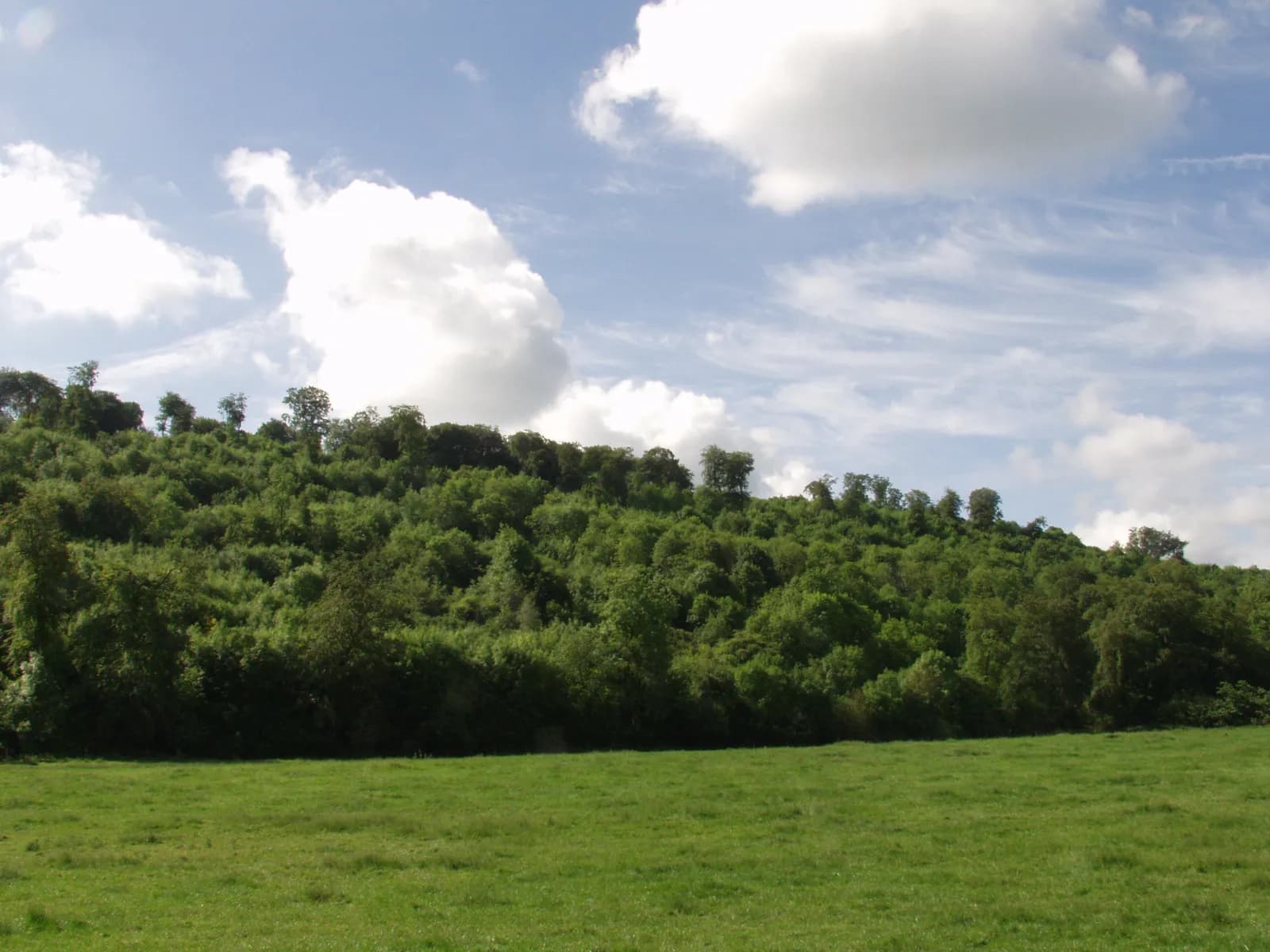
Every reader of The Wind in the Willows remembers the Wild Wood; that dark, dangerous territory where Mole becomes lost and where the woodland creatures whisper of the Weasels and Stoats. The inspiration for this fictional forest lies just beyond Cookham's boundaries in Bisham Woods, specifically Quarry Wood, which adjoins Cookham Dean.
Quarry Wood forms part of Bisham Woods, a local nature reserve on the eastern edge of Bisham village. The dense woodland, with its ancient trees and shadowed paths, provided Grahame with a tangible sense of the mysterious, slightly threatening forest that borders the riverbank in his story. Where the open Thames represents safety, companionship and the "simply messing about in boats" philosophy of Ratty's world, Quarry Wood offered the contrast; a place of ancient, untamed nature where different rules apply.
Return to Roots: Writing the Masterpiece
Grahame never forgot Cookham. After a career at the Bank of England, where he rose to become Secretary, he returned to the village of his childhood. In 1906 he took out a lease on a house called Mayfield (later Herries Preparatory School) in Cookham Dean, close to where he had grown up at The Mount. He retired from the Bank in 1908 and spent his time writing in the same landscape that had formed his imagination forty years earlier.
It was here, among the Berkshire hills and within sight of the Thames, that Grahame completed The Wind in the Willows. Published in 1908, the book initially found modest success but has since become a cornerstone of children's literature. Theodore Roosevelt wrote to Grahame in 1909 to tell him that he had "read it and reread it, and have come to accept the characters as old friends." Christopher Robin Milne, A.A. Milne's son, later recalled that the book was "read aloud or alone, over and over and over" in his family home.
Berkshire's Literary Heritage
Today, The Mount stands as a Grade II listed building, having been listed on 21 September 1987. While the Oxfordshire Blue Plaque at Boham's House in Blewbury marks Grahame's later residence from 1910 to 1920, it is Cookham that holds the deepest claim on his legacy. The village tour explicitly acknowledges the connection: "Kenneth Grahame is said to have been inspired by the River Thames at Cookham to write The Wind in the Willows, as he lived at The Mount in Cookham Dean as a child and returned to the village to write the book."
Grahame died on 6 July 1932 at Church Cottage in Pangbourne, Berkshire. He was initially buried at the Church of St James the Less in Pangbourne, though his remains were later moved to Holywell Cemetery in Oxford to rest alongside his son Alastair. His epitaph, written by his cousin Anthony Hope, reads: "To the beautiful memory of Kenneth Grahame, husband of Elspeth and father of Alastair, who passed the river on the 6th of July, 1932, leaving childhood and literature through him the more blest for all time."
A Living Landscape
Visitors to Cookham today can walk the same towpaths, ford the same river crossings and stand beneath the same willows that inspired Kenneth Grahame. The Thames Path passes through the village, offering views of the river islands and the wooded banks that gave shape to Ratty's world. Quarry Wood remains, its ancient trees still casting the shadows that once frightened Mole. The Mount still overlooks the valley. Berkshire, for Grahame, was not merely a setting but a character in its own right; the riverbank world where animals talk, boats drift and the spirit of place becomes eternal.